Google’s Direct Offers deliver real-time promotions at moments of purchase intent—but rely on opaque AI decisioning. This article explains what Direct Offers are and how retailers can build the same high-intent experiences with Kevel, using transparent, first-party logic and full control.
Google recently announced Direct Offers, describing them as “a new way for shoppers to find exclusive deals in AI Mode.” Positioned as a retailer-friendly innovation, Direct Offers allow merchants to attach discounts or perks—such as free shipping or limited-time savings—to sponsored products at moments of high purchase intent.
On the surface, the concept is compelling. In practice, however, while retailers define the offers themselves, Google’s AI ultimately decides when, where, and to whom those incentives appear. That decision-making happens inside a largely opaque system, shifting meaningful control over merchandising and pricing into a black box optimized for Google’s priorities—not the retailer’s.
As is often the case with many of the recent ad-tech announcements, Kevel customers have already been delivering similar experiences—without giving up control. For example, a leading pharmacy in Europe has been using Kevel to power sponsored products inside its own chatbot experience since 2024. This retailer-owned surface is exactly where capabilities like Direct Offers can be layered in thoughtfully, using first-party, transparent logic, and business rules defined and owned by the retailer.
Like our post on Sponsored Products Video late last year, this follow-up breaks down what Google Direct Offers are—and shows how retailers can build similar high-intent offer experiences with Kevel, while keeping strategy, logic, and control firmly in their own hands.
What Are Direct Offers?
Google Direct Offers are a new ad format within Google Ads that let retailers attach promotions—such as discounts or free shipping—directly to sponsored products at the moment a shopper is most likely to convert, often within a chatbot or AI-driven experience.
Retailers define the offers, but Google’s AI determines when and where those offers appear based on intent signals that largely live inside Google’s ecosystem. For shoppers, this can feel like timely, relevant value. For retailers, it introduces a tradeoff: potentially higher conversion rates versus reduced transparency and control over when promotions are deployed and how pricing strategy is applied.
That tension is exactly where a retailer-first approach matters. With Kevel, retailers can implement the same “offer at the moment of intent” experience—without outsourcing decision-making to a black box. Offer eligibility, timing, and prioritization are applied deliberately, in service of the retailer’s business goals rather than a third-party platform’s algorithm.
How to Implement Direct Offers with Kevel
Implementing Direct Offers with Kevel involves two core components: management configuration and delivery configuration. Together, these ensure offers are both strategically controlled and seamlessly delivered at serve time.
Management Configuration
Management configuration covers everything needed to define offers and control who they’re eligible for—whether that’s specific advertisers, campaigns, products, or audience segments.
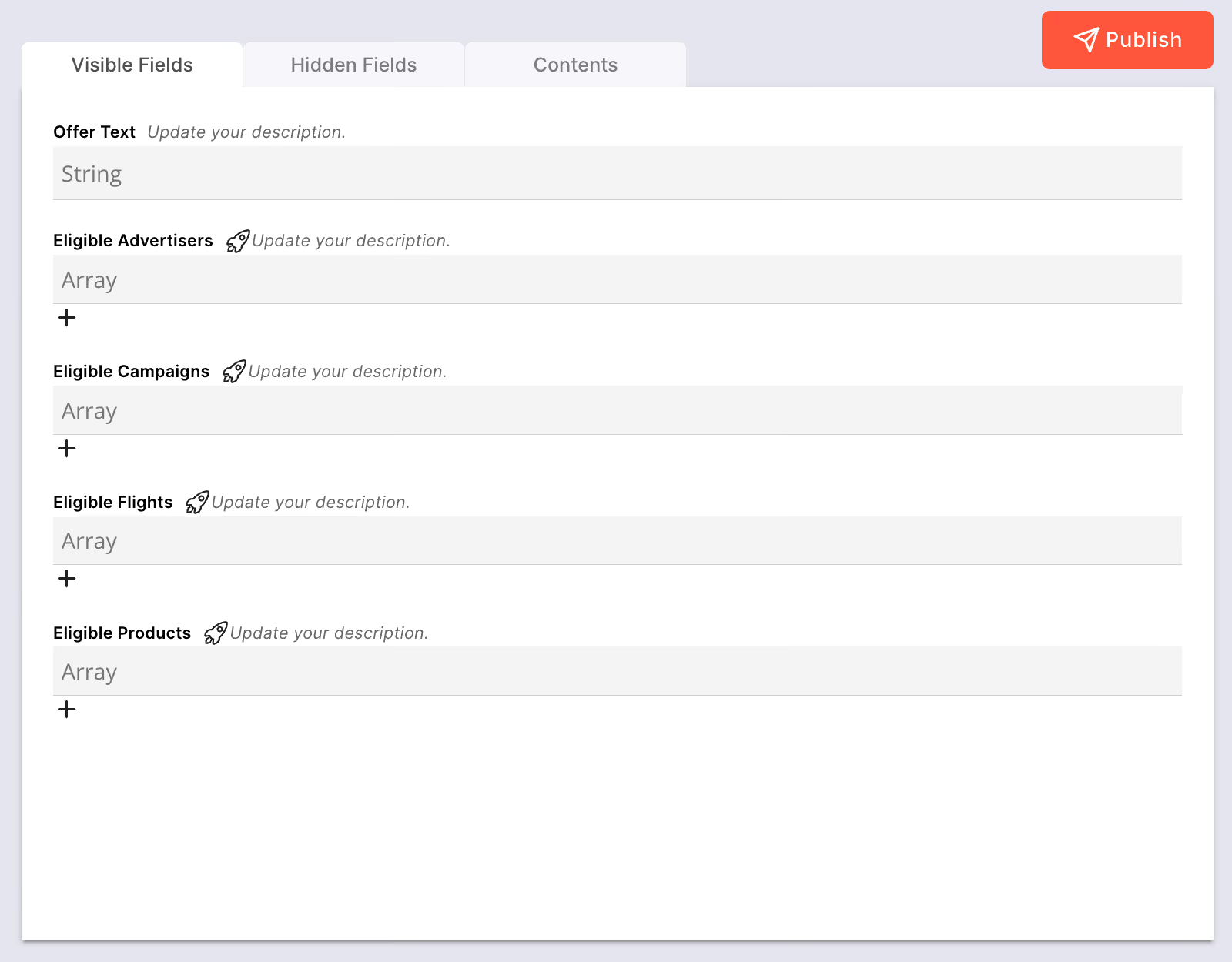
Step 1: Create a Creative Template
Start by creating a creative template designed to support Direct Offers. This template should include:
- Offer Text
- Optional eligibility fields (Advertiser ID, Campaign ID, Flight ID, Product/SKU)
Keep these fields optional and enable AdQuery, allowing offers to be evaluated dynamically at serve time.
This flexibility is what allows you to scale offer strategies without constantly rebuilding campaigns. Kevel’s support team or your Solutions Architect can easily set this up for you as well.
Step 2: Create and Configure Your Offer Ad
Next, create an ad using the Direct Offers template. If an offer should apply only to a specific advertiser, campaign, flight, or product, populate the relevant IDs. Leaving fields blank makes the offer globally eligible.
This step is also where user targeting comes into play.
Want to:
- Incentivize high-intent shoppers?
- Help premium advertisers win competitive placements?
- Offer conquesting incentives against specific competitors?
Kevel Audience enables targeting based on first-party signals and custom segments. You can also prioritize targeted offers over globally eligible ones, cap redemptions, or pace offers over time. All standard Kevel pacing, targeting, and delivery rules still apply—giving you complete visibility and control.
The Control Advantage
The biggest advantage of this approach is transparency. With Kevel, retailers know exactly:
- Why an offer was shown
- Which rules applied
- How performance ties back to business decisions
Nothing is hidden, and nothing is left to be decided by an opaque algorithm. This is a major difference from Google Direct Offers, where offer delivery logic is abstracted in a black box and retailers must trust that the system is acting in their best interest.
Kevel’s approach is deterministic, auditable, and fully owned by the retailer. That makes it easier to explain results to advertisers, optimize intentionally, and evolve strategy on your own timeline—without waiting for platform changes or algorithm updates.
Delivery Configuration
Once your offers are configured, the next step is enabling them within your chatbot, search experience, or sponsored listings.
Step 1: Make Your Standard Decision API Request
Begin with your standard Kevel Decision API request for sponsored results, just as you do today. After determining which product to show—whether it’s the top result returned by Kevel or one selected after applying your own organic relevancy or reranking logic—capture the associated Advertiser ID, Campaign ID, Flight ID, and SKU.
Step 2: Request the Relevant Offer
Next, make a second Decision API request specifically for offers. Use AdQuery to pass the captured IDs and SKU back to Kevel, evaluating whether a Direct Offer, if any, should apply to the selected product at that exact moment.
Because AdQuery is fully indexed, these offer lookups are extremely fast and introduce no meaningful latency—even in real-time environments like chatbots. Passing precise IDs ensures the most relevant, highest-priority offer is returned.
Step 3: Render and Track
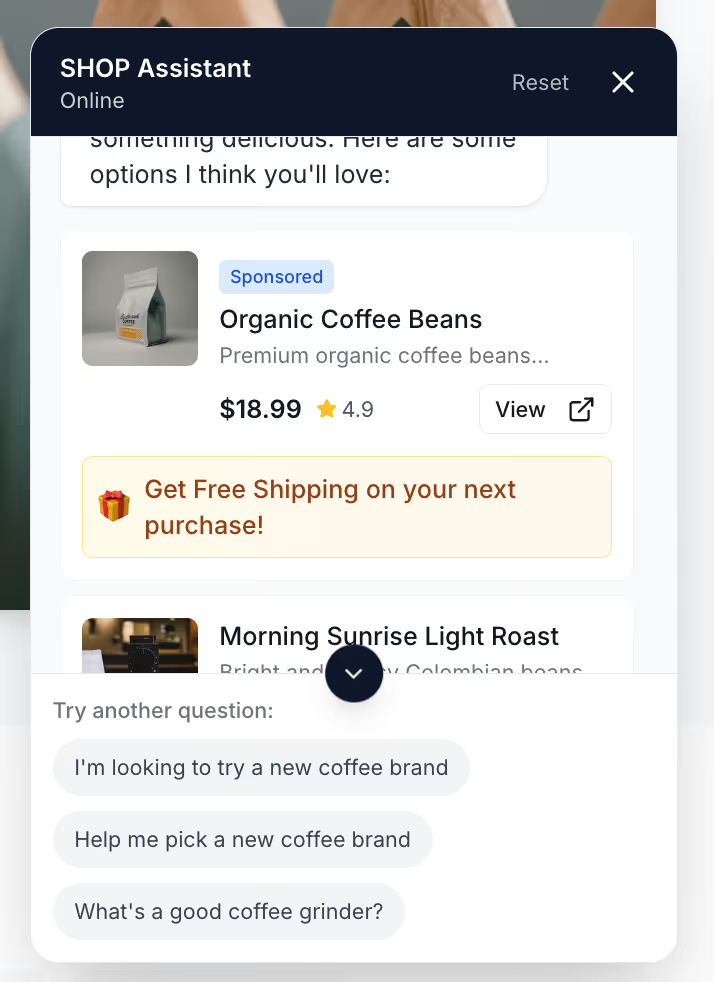
If an offer is returned, enhance the sponsored product at render time by displaying the offer alongside the product. Be sure to fire the additional tracking so offer performance can be measured independently from sponsored product performance—allowing you to understand the true incremental impact of your Direct Offers.
Direct Offers In Action
In practice, Direct Offers integrate naturally into conversational and commerce-driven experiences. Within a chatbot, for example, sponsored products and incentives can appear organically within the flow of the conversation—providing value at the exact moment a shopper is deciding what to buy.
If you’d like to explore a live, real-world demo of Direct Offers served through Kevel, reach out to the team and we’ll share a walkthrough link so you can see the experience firsthand.
The Bottom Line
Google Direct Offers reflect a real shift in commerce: incentives are no longer planned weeks in advance. They are applied dynamically, at the moment a shopper is deciding whether to buy.
The risk is letting that moment be owned by a system you cannot see, audit, or control.
Kevel offers retailers a better path—enabling the same high-intent experiences directly within chatbots, search, and sponsored listings, without surrendering control over pricing, eligibility, or measurement. Direct Offers don’t have to be a black box. They can be intentional, transparent, and fully retailer-owned.
Want to see how this could work for your business? Reach out to the Kevel team to learn more about building Direct Offers with full control and transparency.