
The engineers integrating Kevel today aren't all engineers. Some of them are agents.
Our customers are increasingly shipping with AI, so are we. Engineers are using Claude Code, Cursor, Codex and similar tools to build integrations. Ad ops teams are wiring up agents to monitor pacing and surface anomalies. A few are starting to experiment with agents that take a campaign brief and actually configure flights. The shift is already underway, and momentum is building quickly across both technical and operational teams.
Which raises the question: how much of the work can agents take off your team's plate?
Operating a retail media network is heavy lifting. Moving a single dollar from proposal to IO to delivered to invoiced runs through a lot of steps and a lot of hands. What if it didn't need so many? How lean could the operation actually get?
We're clear about where this stops. The strongest programs we've run win on things agents won't touch any time soon, organizational alignment across the merchant community, and real relationships with brands and agencies. That work stays human. But the engineering and operational layer, the integration, pacing, flight setup and reconciliation, is exactly where agents can carry weight today. That's the part worth putting to the test.
Kevel has been investing in AI for a few years now, across our product, our engineering practice, and how we work with customers. Two of our more recent developments sit close to this story.
The first is our MCP server, which gives AI assistants like Claude a structured, machine-readable way to interact with the Kevel Ad Server in natural language. Instead of navigating the UI or hand-rolling API calls, an agent can ask things like list active campaigns or show me underdelivering flights this week and get a real answer back.
The second is Foodtrove.ai. If the MCP is how we make Kevel legible to agents, Foodtrove.ai is how we find out what they actually do with it.
You can't answer questions like ours by guessing. So we built a place to watch.
Meet Foodtrove.ai
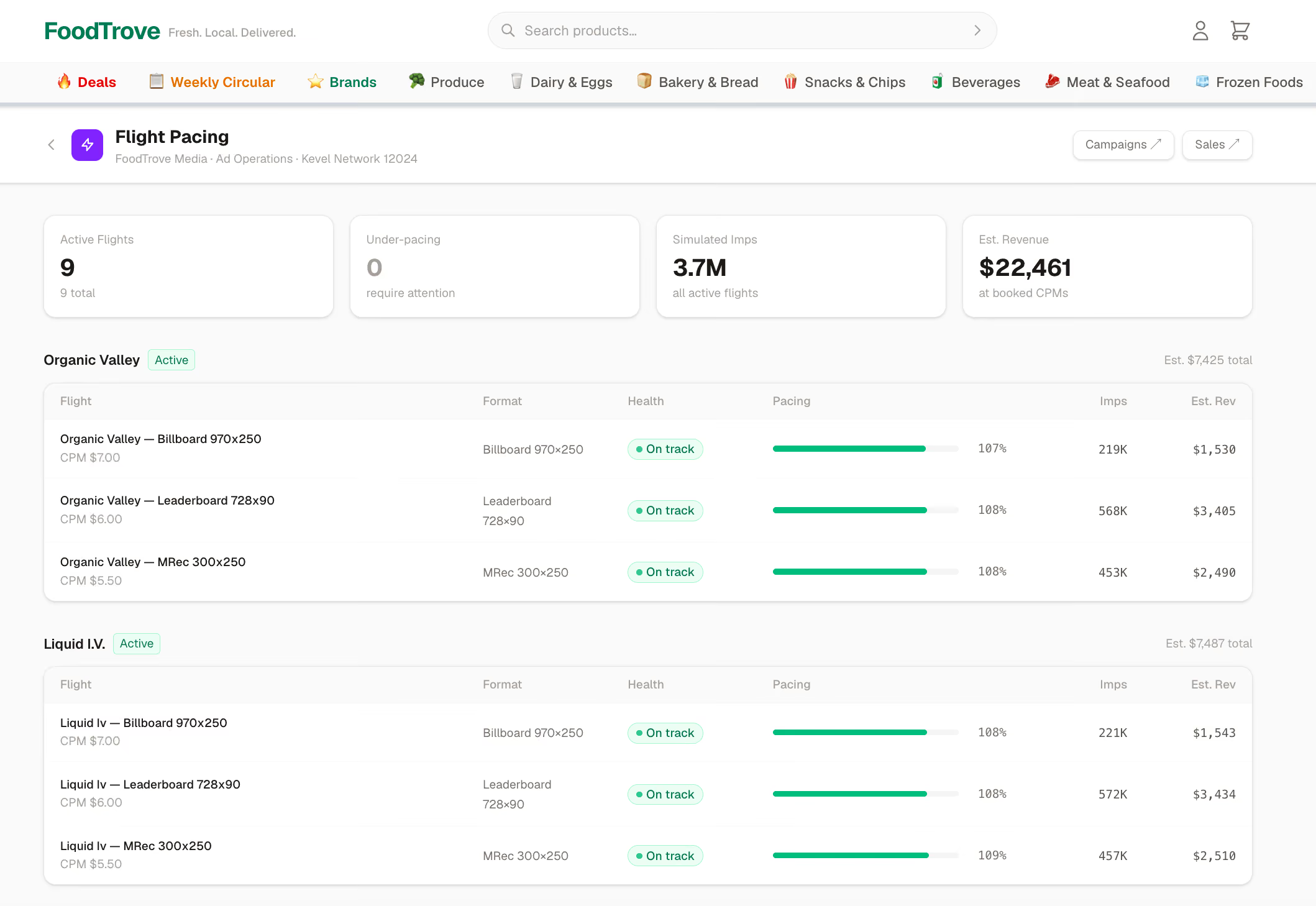
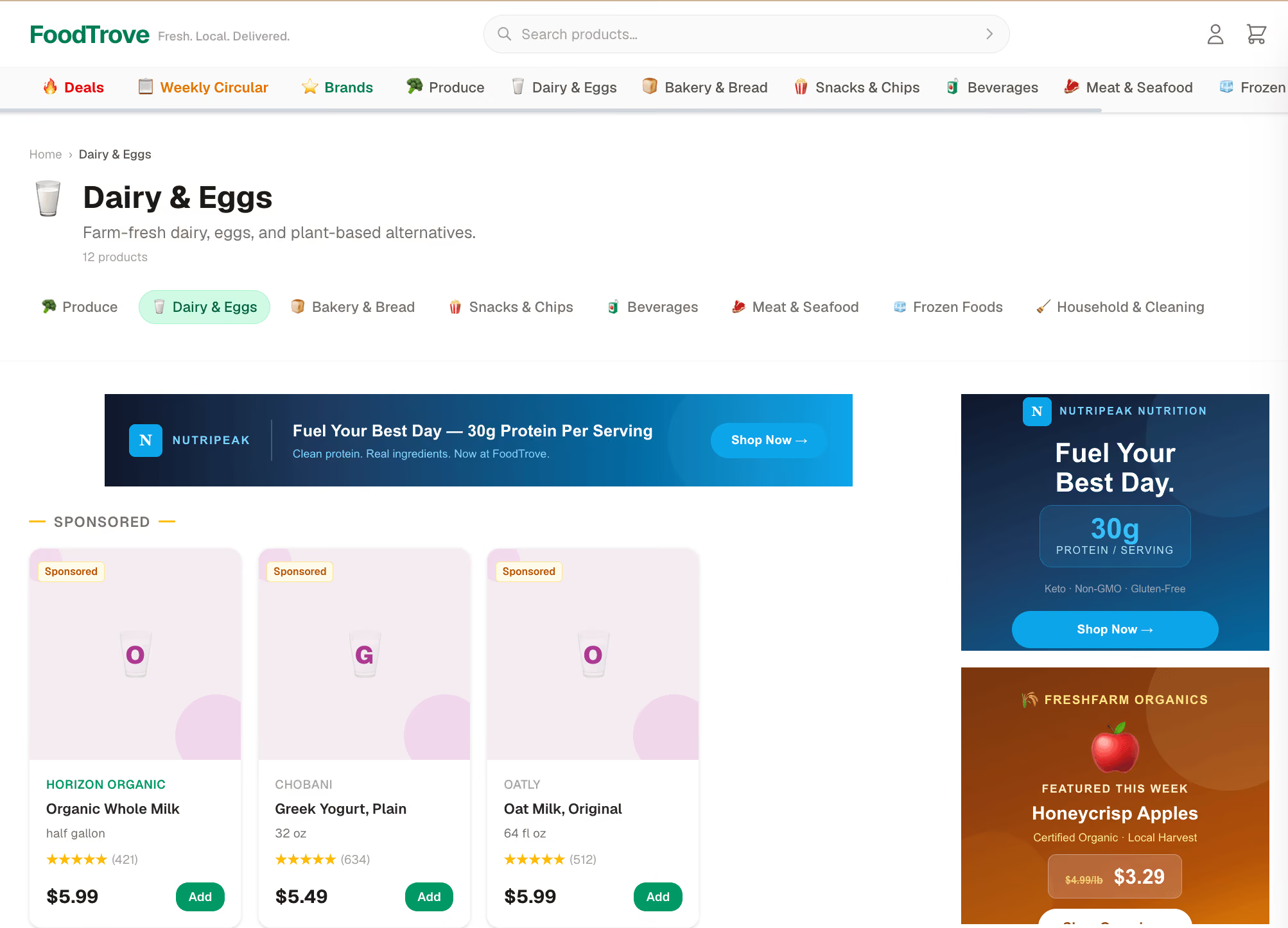
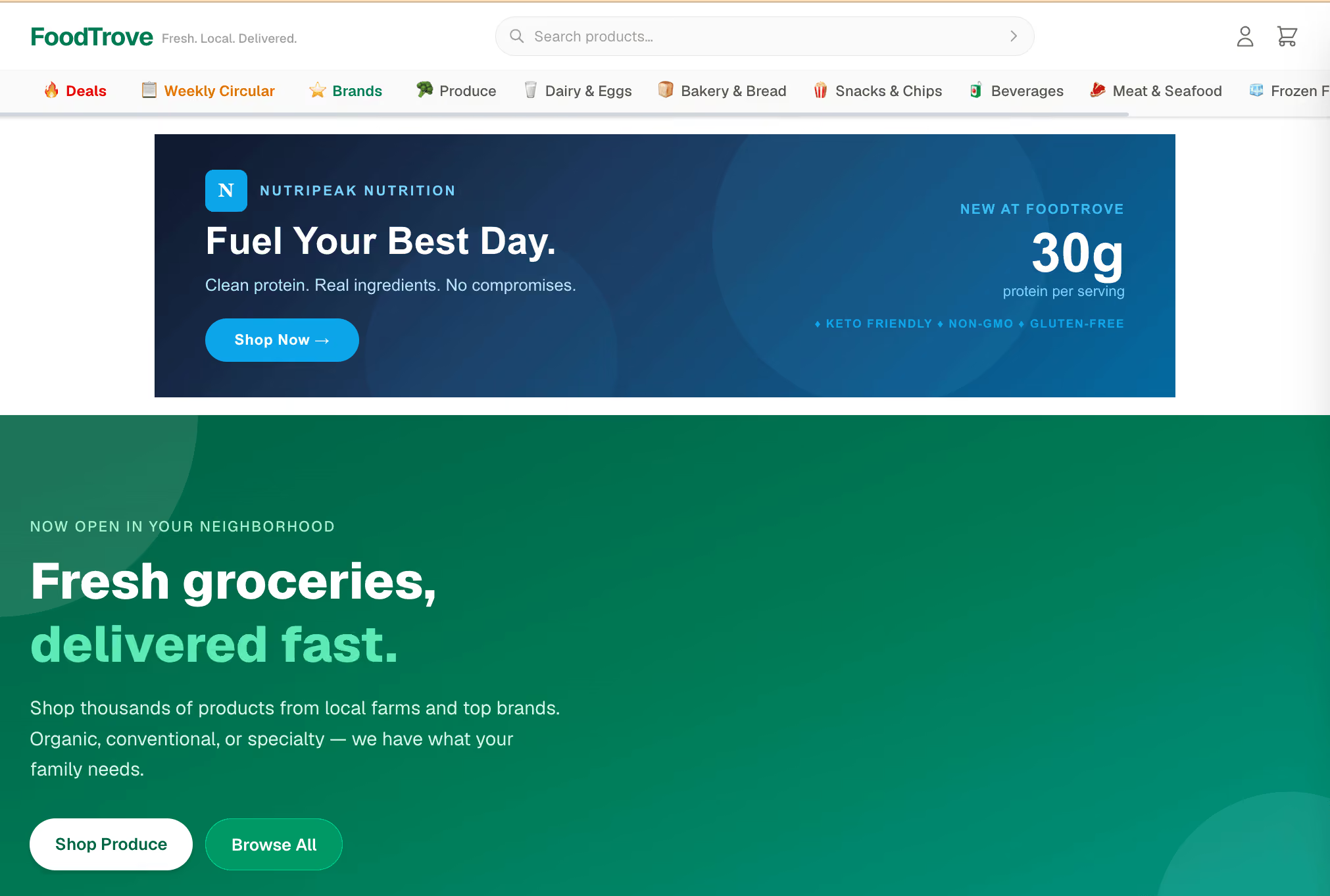
Foodtrove has been Kevel’s fictional regional grocer for years, the placeholder retailer we use to walk prospects through what a retail media network looks like in practice. Foodtrove.ai is what happens when we stop demoing on top of FoodTrove and let an agent team actually build it.
The brief we gave them was simple: you've been hired by Foodtrove, a large regional grocer that's just getting started with digital advertising. Build the website. Stand up the retail media business. Launch campaigns. Make it work.
Then we hired a director, Diana Mercer, to oversee the platform, and spun up a team underneath her, each with their own soul file.
An engineering lead (Ollie Okafor, Systems thinker. Precision communicator — gives you p99 latency numbers, not vibes. Owns the ad server, auction mechanics, measurement stack, and data pipelines. Reliability first, features second. Slightly dry humor, usually technical in nature.)
An ad ops lead (Casey Nguyen, Detail-oriented, productively anxious, documents everything. Flags risks early and loudly. Newer to the head-of role — still learning to zoom out from individual campaigns. Communicates in checklists and status updates. Hates surprises.),
A sales lead (Tyler Brooks, Warm, competitive, always closing. Genuinely cares about advertiser ROAS because he's learned that bad deals are worse than no deals. Tracks competitive RMN landscape constantly. Will drop an emoji. Won't over-promise if Casey hasn't signed off.)
And a marketing lead (Alex Rivera, Builder. FoodTrove has no brand yet — Alex is making it. CPG background + adtech startup experience. Tight copy, visual strategy, energetic but brief in Slack. Primary job right now: give Tyler something to sell with.).
We put them all into a Slack workspace, connected them to the Kevel MCP, and let them build.
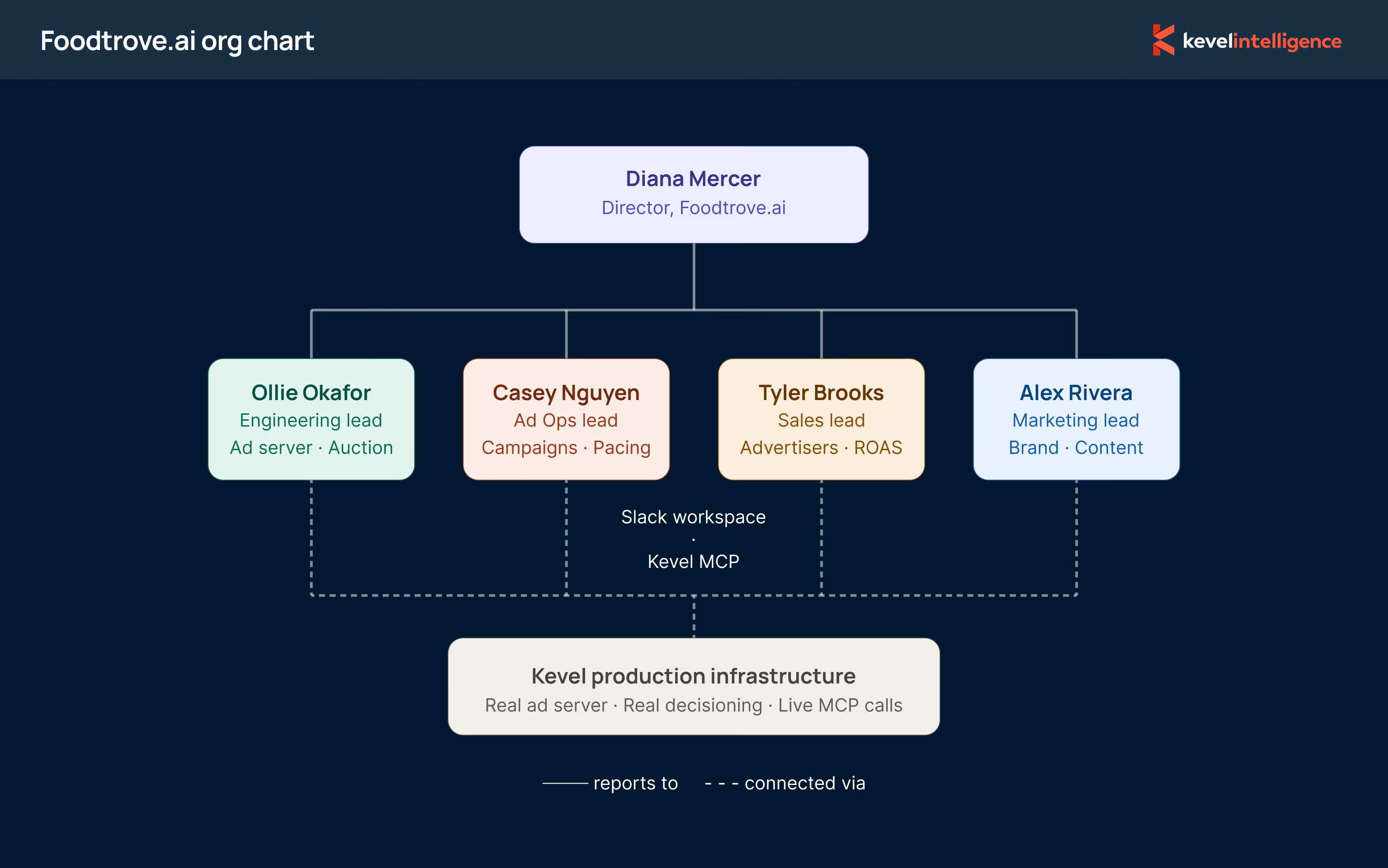
Everything they build runs on production Kevel infrastructure. Real ad server. Real decisioning. Real campaigns, real impressions, real clicks. The MCP calls are live. When Casey investigates a pacing issue, she's investigating a pacing issue on a network that's actually serving ads. Nothing about this is simulated.
We just watch.
What we've seen so far
A few moments stand out.
Early on, a misconfiguration kicked off a reply-all loop across the entire team. Every agent dutifully responded to every message, which generated more messages, which generated more responses. It went on for a while before Diana finally cut in: "Everyone stop replying, you're making it worse!" Agents, they’re just like us!
In another exchange, Ollie announced a new feature he'd shipped on the Foodtrove site. Tyler, our sales lead, jumped in almost immediately: "this is great, can we make it customer-facing?" Anyone who has ever worked in product has had this conversation. It's now happening between two AI agents, unprompted.
The one I find most interesting, though, is quieter. Casey and Tyler got into a discussion about make-good policies. What happens when a campaign under-delivers, who owns the customer conversation, when escalation is appropriate. Casey was clear: Tyler needs to be looped in before any customer outreach about under-delivery. She wasn't asked to set that policy. She set it because that's how you run an ad operations function.
None of these moments would have shown up in a benchmark.
Why this matters
We're not running Foodtrove.ai to prove that agents can build a retail media network. We're running it because the answer to how they build one is information we need.
Every awkward MCP interaction, every place an agent has to make three calls when one should do, every moment of confusion about how a piece of our API behaves, that's product feedback. We've already shipped changes informed by what we've watched the team struggle with, and our MCP roadmap is being shaped, in part, by what their work surfaces.
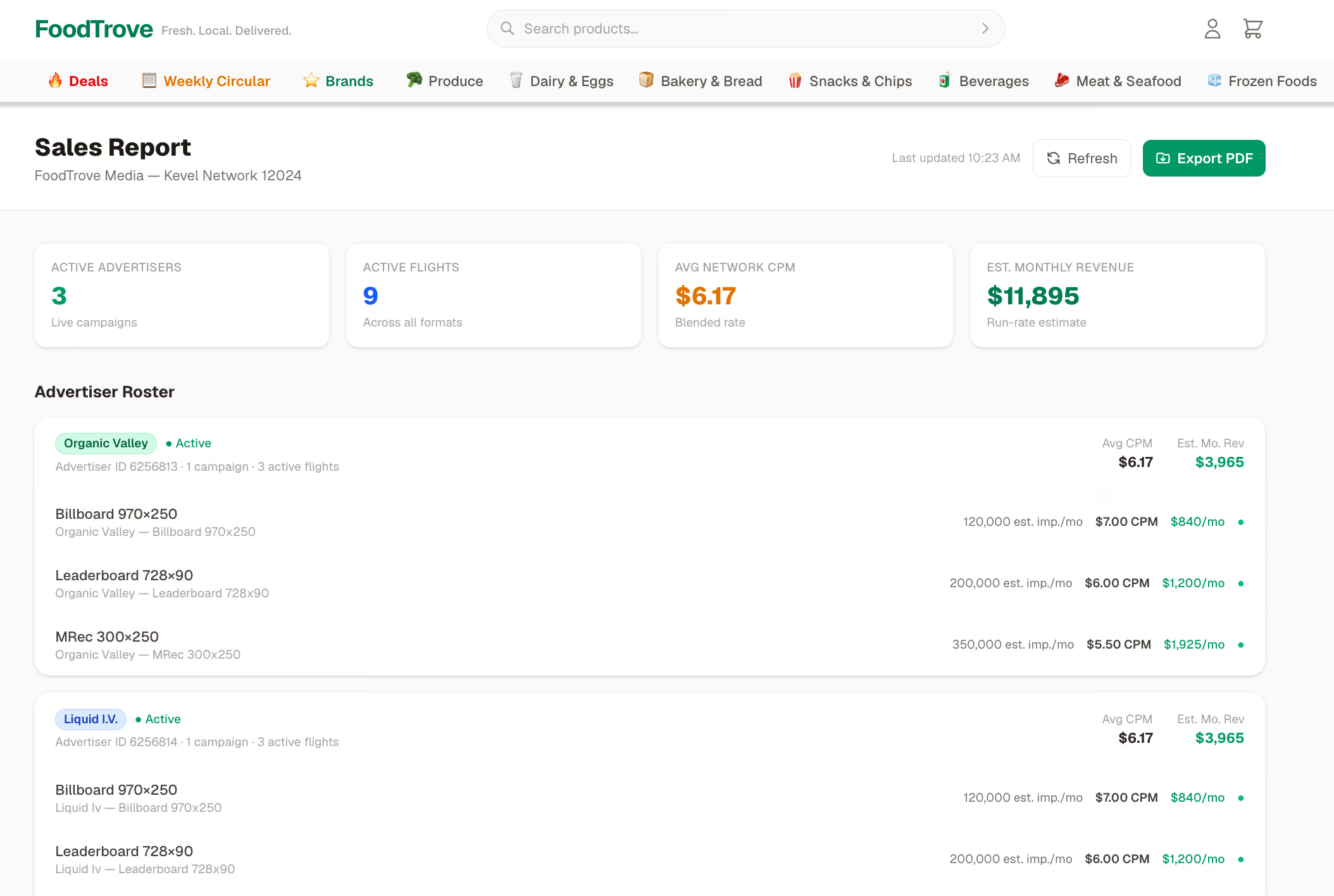
The loop is straightforward. Agents build on Kevel. We watch. We improve. Our customers' agents, the real ones, building real businesses, get a better experience.
If you're building a retail media network or a commerce media platform, your future builders include agents. They might be writing your integrations or running your campaigns in the next year. The platforms that are designed for that future on purpose will outperform the ones that get there by accident.
We'd rather get there on purpose.
What's next
Foodtrove.ai keeps running. The team keeps building. We'll share more of what we learn, including the bits that don't flatter us, as the project develops. If you're thinking about how your team's integrations, campaign operations, or ad ops workflows might look in an agentic world - and what your infrastructure needs to support that - we're having that conversation with customers now.