More and more sites are moving towards native ads instead of avoiding site monetization or relying on annoying pop-up ads. But what is native advertising? Why is it appearing online and in apps?
In this article, we define native advertising and discuss how these ad types can monetize your website/app experience.
What is native advertising, and who uses it?
Native advertising means integrating ads seamlessly into your feed, homepage, search results, and more. Often, these native ads look identical to your standard content, except with an added “sponsored” or “promoted” tag.
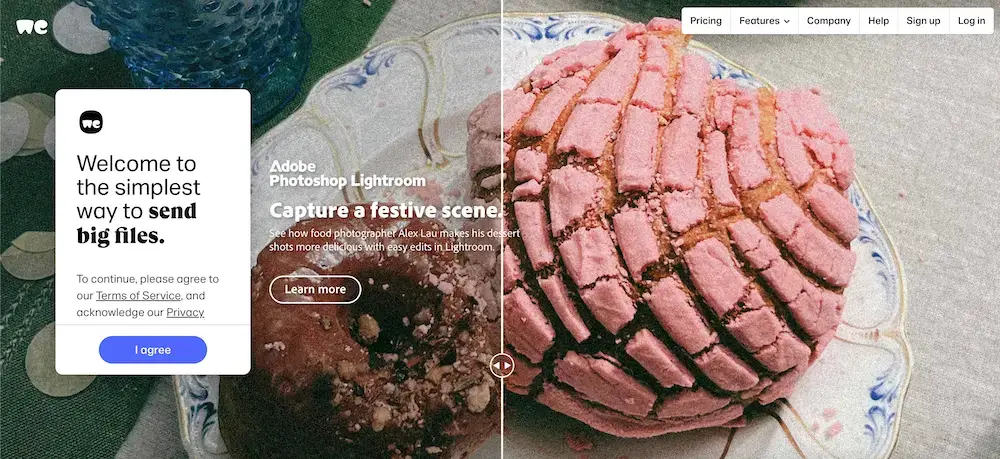
However, other industries are moving towards integrating native advertising into their sites/apps. WeTransfer (a file transfer service), for example, shows skin ads on their homepage. These promotions allow WeTransfer to monetize their free users without disrupting the user experience. Additionally, others — from fintech to marketplaces — have built native ad platforms for sponsored deals, promoted listings, and other featured content.
Why monetize with native advertising?
In the U.S., native advertising was an approximately $106B market in 2024. A report by Grand View Research estimates it will reach nearly $347B by 2033, growing at a CAGR of 13.9% between 2025 and 2033. Advertisers are increasingly looking for innovative, native display ads rather than standard banners, and demanding these innovative formats because of their high user engagement. Meanwhile, publishers are looking for true native, server-side ads because of their seamless integration with their existing site and surrounding content. This further engages users, leaving them with a positive site experience and keeping them on the page for longer.
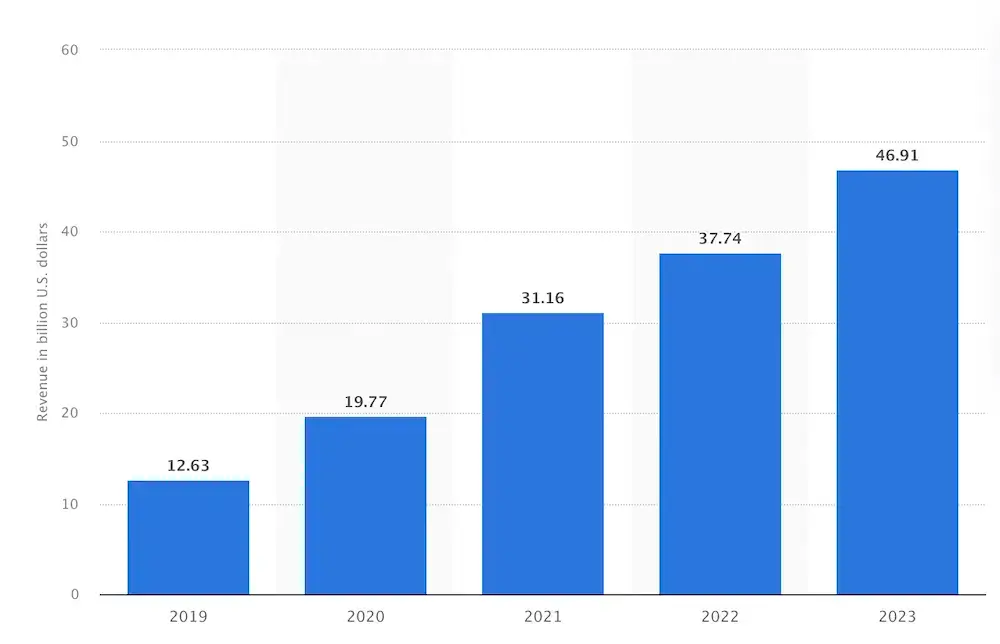
Overall, native ads encompass a variety of formats, like video ads, sponsored listings, in-feed ads, native skin ads, and more. Each of these formats are substantially growing in popularity. Consider Amazon, whose AMZN advertising business recently hit a milestone in Q2 2025, capturing 9.36% of the company's total revenues, or $15.6B — the highest share ever recorded. Their ad business operates mainly by running native sponsored listings, signaling that these organic-looking ads are winning advertisers and users over, meaning more publisher revenue.
How do you integrate native advertising?
There are three ways to integrate native advertising into your platform: a homegrown ad product, a third-party ad server, or an API ad serving solution.
1. Building your own native ad server from scratch
Here, you’d build out a large tech team and design the ad product from scratch. By building it from the ground up, you have full control over its scope and vision. Facebook, Amazon, and Pinterest took this route.
You might consider building your own ad server if:
- You want something that you own 100%.
- You want control over what features are prioritized.
- You don’t want to pay vendor fees.
You might think twice if:
- You can’t wait years. Facebook, Amazon, and others took years to build out their ad platforms, which means no revenue in the meantime.
- You don’t have the engineering resources. Building an ad platform from scratch requires many experienced engineers. This drains your resources and can be costly.
2. Third-party ad server or native ad network
Alternatively, you might consider a third-party ad solution, such as Google Ad Manager’s ad server or a “native” ad network like Outbrain or Taboola. All of these solutions will be client-side and involve JavaScript tags or in-app SDKs.
You might consider using a third-party ad solution if:
- You need a fast launch time. Tag-based ad networks can be integrated in less than a day.
- You need advertiser demand. Taboola, for instance, has built in advertisers willing to buy these “You May Like” spaces. And Criteo, a sponsored products ad network, brings retail advertisers with them.
You might think twice if:
- You want truly native ads. Tag-based integrations and native ad networks require ad unit conformity. This may work for templated sponsored content boxes, but designing ads that fit into your site/app seamlessly is not possible with these solutions. They will always look slightly (or entirely) off.
- You want control and customization. The advertisers and look of the ads is controlled by the third-party, not by you.
- You want to avoid the pitfalls of tag-based ads. In the next section we dive further into what these issues are.
3. Ad APIs
The final option is building the ad platform yourself, but using ad APIs to speed up the time to launch, similar to building your communications solution on top of Twilio. With these tools, you integrate via APIs to get instant access to the building blocks you need to design a native ad product, including ad decisioning, tracking, targeting, management, and reporting.
You might consider using ad APIs if:
- You want a native ad platform sooner than later. Using infrastructure APIs can cut down build time by 90%.
- You don’t want to spend a fortune. Rather than paying engineers, server fees, and other expenses, these solutions charge a set SaaS fee.
- You want truly native ads. Server-side ad requests allow you to integrate native ads that appears exactly like organic content.
You might think twice if:
- You have no advertisers. Ad APIs generally provide the infrastructure, not the demand, so you’ll need existing advertiser relationships.
- You want to launch a new platform in a few days. Some engineering resources are required, and it’ll likely take a few weeks.
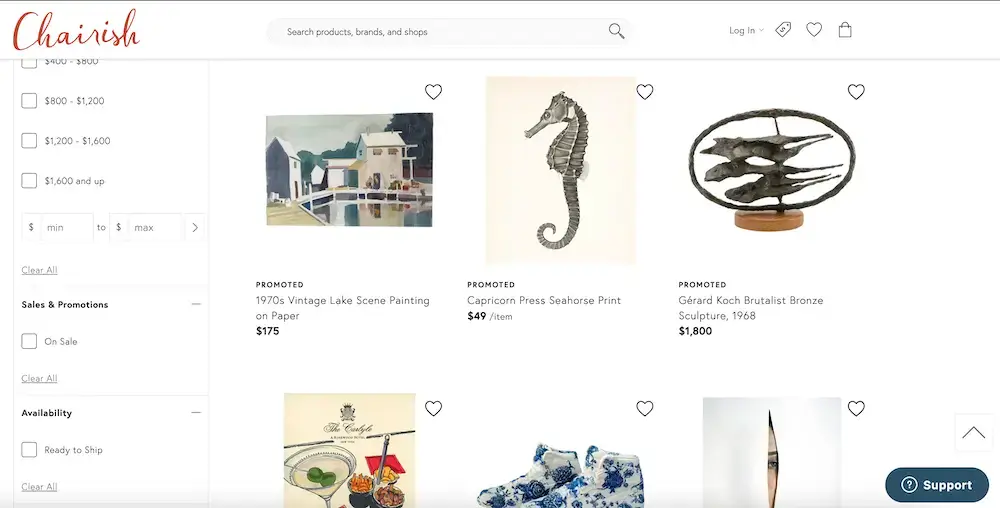
For instance, Chairish is a marketplace for buying and selling antique furniture. They created a new revenue stream by letting vendors promote their listings, similarly to Amazon’s and eBay’s ad platforms. These native ads appear simultaneously alongside organic search results.
Why Google Ad Manager and ad networks don’t work for native advertising
You may currently use Google Ad Manager (which has approximately 90% of the ad server market) or be considering a third-party ad network like Outbrain, Sharethrough, AdBuff, Polymorph, or Criteo.
While these tools allow you to insert native-esque placements, they are nonetheless flawed, with client-side integration that relies on JavaScript tags or bulky in-app SDKs.
Client-side ad serving involves inserting ad code directly onto the page or app. These tags then ping the ad tech vendor directly, who picks the winning ad and inserts it wherever the code was placed.
The alternative is a server-side integration, enabled by ad APIs. Server-side calls happen outside of the client, via a backend request. You post an API request and get a response containing the winning ad’s details, which you then parse and place directly into your site/app as it loads. No JavaScript ad tags are needed.
Ultimately, the benefits of server-side over client-side integrations include:
- Truly native ads: With a server-side integration, native advertising can be uniform with your existing content. You get to control and customize how the ads appear in your site and app. Client-side native ad networks, on the other hand, may share similarities with your content, but will never totally fit in. Google, for instance, offers many “native ads” powered by them. In reality, these are just banner ads that appear within a feed and do not look like the other listings.
- Safety: Malware can infiltrate ad tags, costing publishers millions. With server-side solutions, there is no risk of malware, as there are no third-party codes on your site.
- Privacy: In a privacy-first world, you need to limit the third-party cookies on your site. Tags can drop cookies without your knowledge, but a server-side implementation ensures this won’t happen.
- Speed: Ad tags slow down website/app load times, negatively impacting the user satisfaction and causing attrition (14% of your audience will look elsewhere if your page loads slowly). Ad tags can take 500+ milliseconds to load, while the response time of server-side ad APIs can be as low as 35ms.
- Avoid ad blocking: Ad blockers recognize ad tags and shield them from users. This means nearly 30% of potential impressions never get filled, decreasing revenue from those visitors. Meanwhile, ad blockers have trouble recognizing server-side ads, as no ad tags are used, meaning you can monetize your ad block users.
Most third-party tools — like GAM and Outbrain/etc. — do not offer a server-side integration. If launching pseudo-native placements quickly is your goal, you can use these tools, but they aren’t advised if you want to build a full-featured, truly native ad product.
Instead, besides building the platform yourself from scratch, your best option is an ads API partner, who is server-side by default.
Is native advertising FTC compliant?
The United States’ FTC requires publishers to differentiate ads from organic content. Here’s a quick checklist to see if your native ads fit within FTC guidelines:
Are they distinguishable? In this WeTransfer example, the skin ad for American Express is obviously an ad, not standard content.
Did you provide disclosure? If the native ad is not distinguishable, is it labeled using non-ambiguous terms and without any blockage?
For more information, see our article on FTC native ad compliance.
How much can I make from native advertising?
The native advertising sector is expected to reach between $346 to $400B by the early 2030s. Advertisers are increasing their native ad budgets, hoping to capitalize on the higher engagement rates of these ad units. Now is the time to build an ad platform that supports this.
Your ad revenue is dependent on many factors, including your traffic size, product, amount of ads, fill rate, etc. Below provides our analysis of average CPMs for various native ad units, as well as educated guesses on the CPMs that major ad platforms drive. (“CPM” stands for “cost-per-mille” and refers to the revenue you make for every 1,000 ad impressions).
It should be noted that these values are all much higher than standard programmatic banner ads -- which can average $0.50 - $1.50 -- highlighting the great opportunity every publisher has in launching or switching to native advertising.
How to launch native advertising quickly
If you’re interested in launching native advertising — and don’t want to wait years — we’d love to chat. Kevel is the industry leader in ad APIs, and we’ve helped other brands like WeTransfer, Slickdeals, and Ticketmaster integrate high-revenue native advertising in just weeks.